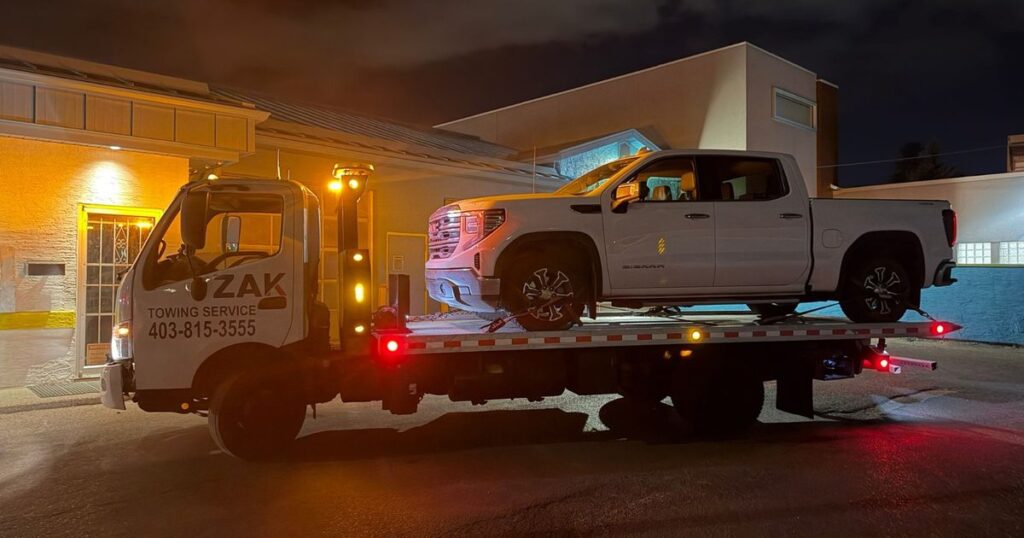
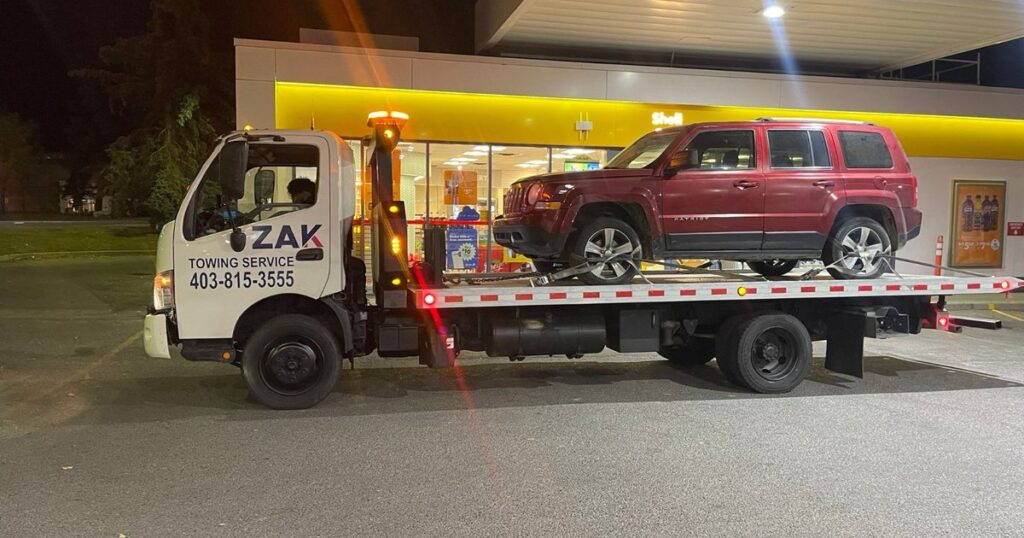
Your car has broken down, and a tow truck is on its way. When it arrives, you may notice it is one of two very different kinds of truck. One carries your whole car on a long flat bed. The other lifts two wheels off the ground and lets the other two roll along the road.
A flatbed truck tow truck is the first kind. Understanding the difference between flatbed and wheel lift towing helps you ask the right question before your car is loaded, and that one question can prevent expensive damage.
How Flatbed Towing Works
A flatbed tow truck has a long bed that tilts back and slides toward the ground. Your car is winched or driven onto the bed, secured with straps, and then the bed levels out for transport. All four wheels stay off the road for the whole trip.
Flatbed towing is the standard choice for:
- All wheel drive and four wheel drive vehicles
- Luxury, classic, and collector cars
- Low clearance and sports cars
- Damaged cars that cannot roll properly
- Many electric vehicles, where the manufacturer advises against towing with wheels on the ground
If you need a flatbed towing service in Calgary, tell the dispatcher what kind of car you have, so the right truck is sent.
How Wheel Lift Towing Works
A wheel lift tow truck uses a metal yoke that slides under the front wheels, or the rear wheels, and lifts that end of the car. The other two wheels stay on the road and roll during the tow.
Wheel lift towing is common for standard cars, and it has real advantages. Hookup is usually quicker, and the truck can work in tight spaces where a long flatbed cannot easily manoeuvre, such as a parkade or a busy street.
But wheel lift towing has limits. The wheels left on the ground keep rolling, which adds wear and mileage. It also needs the car to roll freely, with working steering. For some cars, those rolling wheels are exactly the problem.
Flatbed vs Wheel Lift: Safety Compared
Neither method is unsafe on its own. Safety comes from matching the method to your car, its condition, and the distance.
Vehicle protection: On a flatbed, no tyre touches the road, so there is no road wear, no stone damage, and no extra mileage. With a wheel lift, two tyres roll the whole way, which means wear and exposure to road debris.
Drivetrain risk: This is the biggest difference. On an all wheel drive or four wheel drive vehicle, the wheels are connected through the drivetrain. If the drive wheels roll on the road during a tow, drivetrain parts can be damaged. A flatbed removes that risk completely, because no wheels turn at all. A wheel lift can still tow an all wheel drive car if the rolling end is placed on dollies, which are small extra wheels that keep those tyres off the ground, but that adds time and complexity.
Damage and clearance: A crashed car, or a car with a broken axle, may not roll straight. A flatbed handles that better, because the car is winched on rather than rolled. Low cars also do better on a flatbed in most cases, although the loading angle still matters for very low vehicles, so mention your clearance when you call.
Distance: For a short local tow, a wheel lift is often fine for a suitable car. For a long distance tow, a flatbed avoids hours of tyre wear and drivetrain rotation, which is why it is the usual recommendation for longer trips.
Speed of hookup: A wheel lift is generally quicker to connect. Flatbed loading takes longer, because the bed must tilt, the car must be winched on, and everything must be strapped down. That extra time is part of what makes it safer for delicate vehicles.
When a Flatbed Truck Tow Truck Is the Right Choice
Choose a flatbed when any of these apply:
- Your car is all wheel drive or four wheel drive
- Your car is a luxury, classic, or collector vehicle
- Your car sits low to the ground
- Your car is damaged, or its wheels will not roll properly
- The tow is a long distance
- The manufacturer advises flatbed towing for your model
For a standard front wheel drive car going a short distance, a regular car towing service may be perfectly fine. The key is knowing which category your car falls into before the truck arrives.
When Wheel Lift Towing Makes Sense
Wheel lift towing makes sense when:
- Your car is a standard two wheel drive model
- The tow is short and local
- All wheels roll freely and the steering works
- The pickup spot is tight, and a flatbed would struggle to get in
- The car needs to be moved quickly out of a dangerous position
Even then, one question protects you. Before the driver hooks up, say whether your car is all wheel drive or four wheel drive. If it is, ask whether all four wheels will stay off the ground. That single check prevents the most common towing damage.
Questions to Ask Before the Tow
When you call, and again when the driver arrives, these questions help:
- Is my car all wheel drive or four wheel drive?
- Will all four wheels stay off the ground during this tow?
- Is my car low, damaged, or unable to roll?
- How far is the car going?
- Does the truck carry straps and wheel chocks for securing the vehicle?
A good operator will answer these plainly. If the answers do not match your car’s needs, say so before loading starts, and ask dispatch to send the right truck.
What If the Wrong Truck Arrives?
Do not let a rushed hookup damage your car. You can ask the driver to confirm the towing method before anything is attached. Describe your car clearly when you call: the make and model, whether it is all wheel drive, whether it is damaged, and exactly where it is parked. Clear information at the start avoids a second truck being called later.
Need a Tow in Calgary? Zak Towing Can Help
Zak Towing is based at 920 9 Ave SW, Calgary, AB T2P 2T9, Canada, and provides towing and roadside assistance for drivers in Calgary and surrounding communities, including Airdrie, Cochrane, Okotoks, and Chestermere.
Whether you need a flatbed for a luxury car, or a quick tow for a standard car, explain your vehicle type and location when you request help, so the right truck is sent the first time.
If you need a flatbed tow quote, or you are unsure which tow your car needs, call Zak Towing at (403) 815-3555 for 24/7 assistance, or contact Zak Towing to discuss the problem.
Frequently Asked Questions
Is flatbed towing safer than wheel lift towing?
In general, yes, because all four wheels stay off the ground, so there is no road wear and no drivetrain rotation. But wheel lift towing is safe for suitable cars on short tows when it is done correctly. Safety depends on matching the method to the car, not on the method alone.
Can a wheel lift tow truck tow an AWD car?
Only with the right method. If the drive wheels roll on the road, drivetrain damage is possible. An all wheel drive car needs either a flatbed, or dollies under the rolling wheels so no drive wheel turns. Always tell the driver your car is all wheel drive before hookup.
Is flatbed towing better for luxury or classic cars?
Usually, yes. With no tyres on the road and no risk of scraping from a lift under the body, a flatbed gives the most protection for valuable, low, or delicate vehicles. It is the usual recommendation for collector cars.
Can a lowered car go on a flatbed?
In most cases, yes, but the loading angle matters for very low cars. Tell the dispatcher about your clearance when you call, so the driver can plan the loading approach.
Does wheel lift towing damage tyres?
The rolling tyres wear during the tow and add mileage to the car. For a short trip, that wear is minor. For a long distance tow, a flatbed avoids it completely.
How can I contact Zak Towing?
Call Zak Towing at (403) 815-3555, any time of day or night. Tell us your car type, whether it is all wheel drive, and where you are, so we can send the right truck.
Still unsure which tow your car needs? Call (403) 815-3555 and tell us your car type, drive type, and location.